
Apple Refreshes iPhone, iPad Air, and MacBook Lineups
Apple had a big week, last week! Kicking off March 2026 with a flurry of product updates, refreshing its budget iPhone, mid-range iPad, and entire MacBook lineup. The announcements bring real upgrades across the board, with improved chips, faster storage, and better connectivity.
iPhone 17e Adds MagSafe
The iPhone 17e replaces last year’s iPhone 16e and maintains its $599 entry-level price. The most notable addition is MagSafe support—something conspicuously absent from its predecessor. The iPhone 17e now supports 15-watt MagSafe and Qi wireless charging, opening it up to the full ecosystem of MagSafe accessories.
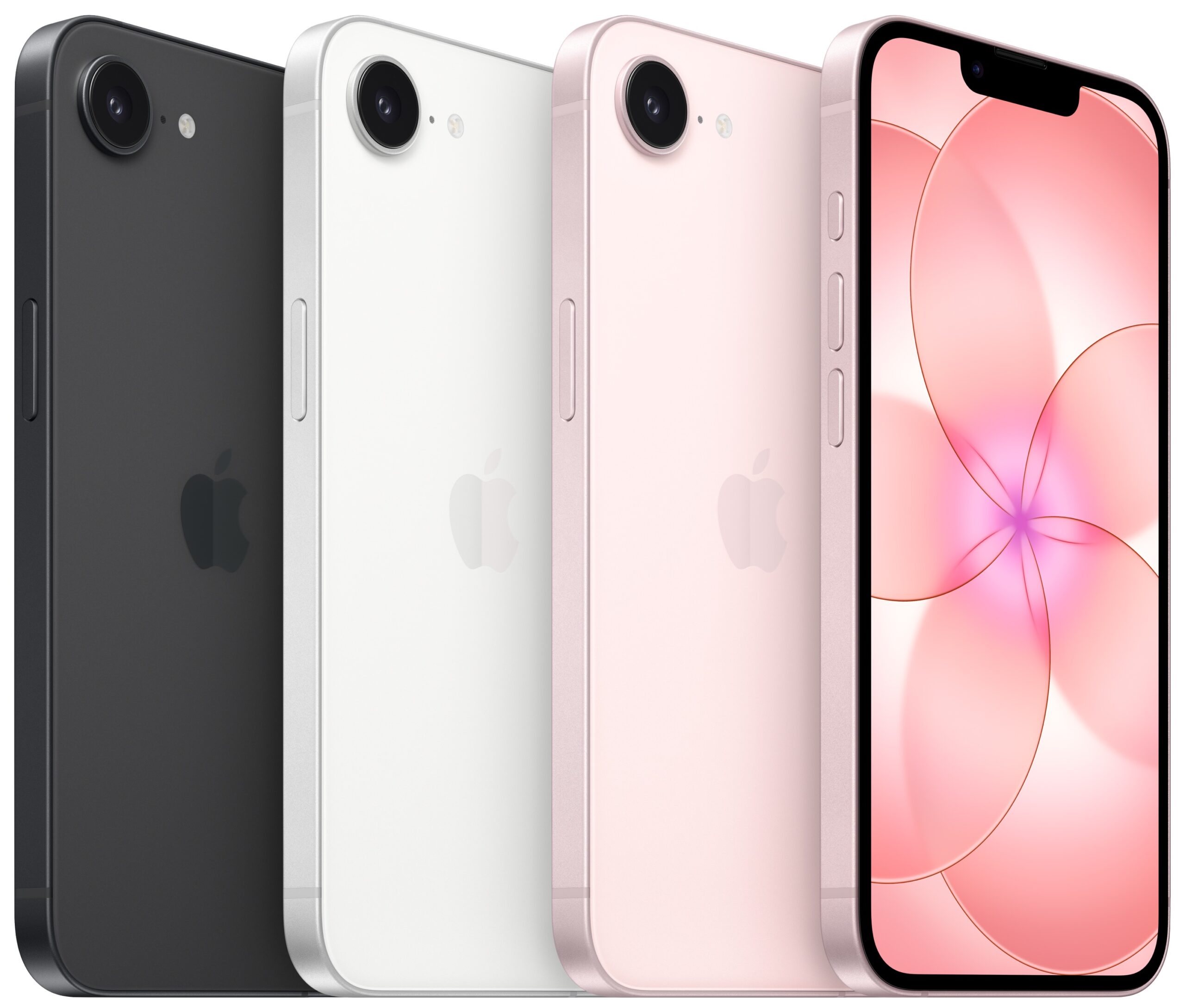
Apple doubled the base storage to 256 GB and dropped the 512 GB price from $899 to $799. The new model runs on the A19 chip—the same processor powering the iPhone 17, though with one fewer GPU core. Apple’s C1X cellular modem promises up to twice the speed of the iPhone 16e’s C1 chip while using 30% less energy.
Other improvements include Ceramic Shield 2 for better scratch resistance, the next-generation portrait mode with post-capture focus and depth adjustments, and a new pink color option alongside black and white.
For users seeking the most affordable iPhone, the iPhone 17e is a solid value at $599 and a real improvement over the iPhone 16e. However, for $200 more, the base iPhone 17 offers a larger, brighter 6.3-inch screen, Camera Control, an additional Ultra Wide camera, better battery life, Always-On display with ProMotion, and Dynamic Island—making it the better choice for users who can stretch their budget.
iPad Air Gets M4 and More Memory
The updated iPad Air brings the M4 chip to Apple’s mid-range tablet while maintaining prices at $599 for the 11-inch model and $799 for the 13-inch version.

The M4 features an 8-core CPU and 9-core GPU, delivering up to 30% faster performance than the M3 version and up to 2.3x faster than M1 models. More significant is the increase in unified memory—the iPad Air now comes with 12 GB of RAM, 50% more than the previous generation’s 8 GB, and memory bandwidth has increased to 120 GB/s. These improvements particularly benefit AI workloads and demanding apps like Final Cut Pro and Pixelmator Pro.
Connectivity receives an upgrade with Apple’s N1 and C1X chips. The N1 wireless networking chip enables Wi-Fi 7 and Bluetooth 6, while the C1X cellular modem in the Wi-Fi + Cellular models delivers up to 50% faster data performance with 30% lower energy consumption than the M3 model’s modem.
Starting storage remains at 128 GB, with options up to 1 TB. The iPad Air continues to be available in two sizes and four colors: blue, purple, starlight, and space gray.
The M4 iPad Air makes sense for users upgrading from pre-M1 iPads or anyone wanting a capable tablet without the premium price of the M5-based iPad Pro models.
MacBook Air Gains M5 and Doubles Storage
The MacBook Air receives the M5 chip along with doubled starting storage of 512 GB. The 13-inch model now starts at $1,099, and the 15-inch model at $1,299. Although those prices are the same as the previous generation’s 512 GB configurations, they’re $100 higher than the previous entry-level pricing to create a little more room between the MacBook Air and Apple’s new entry-level $599 MacBook Neo laptop.
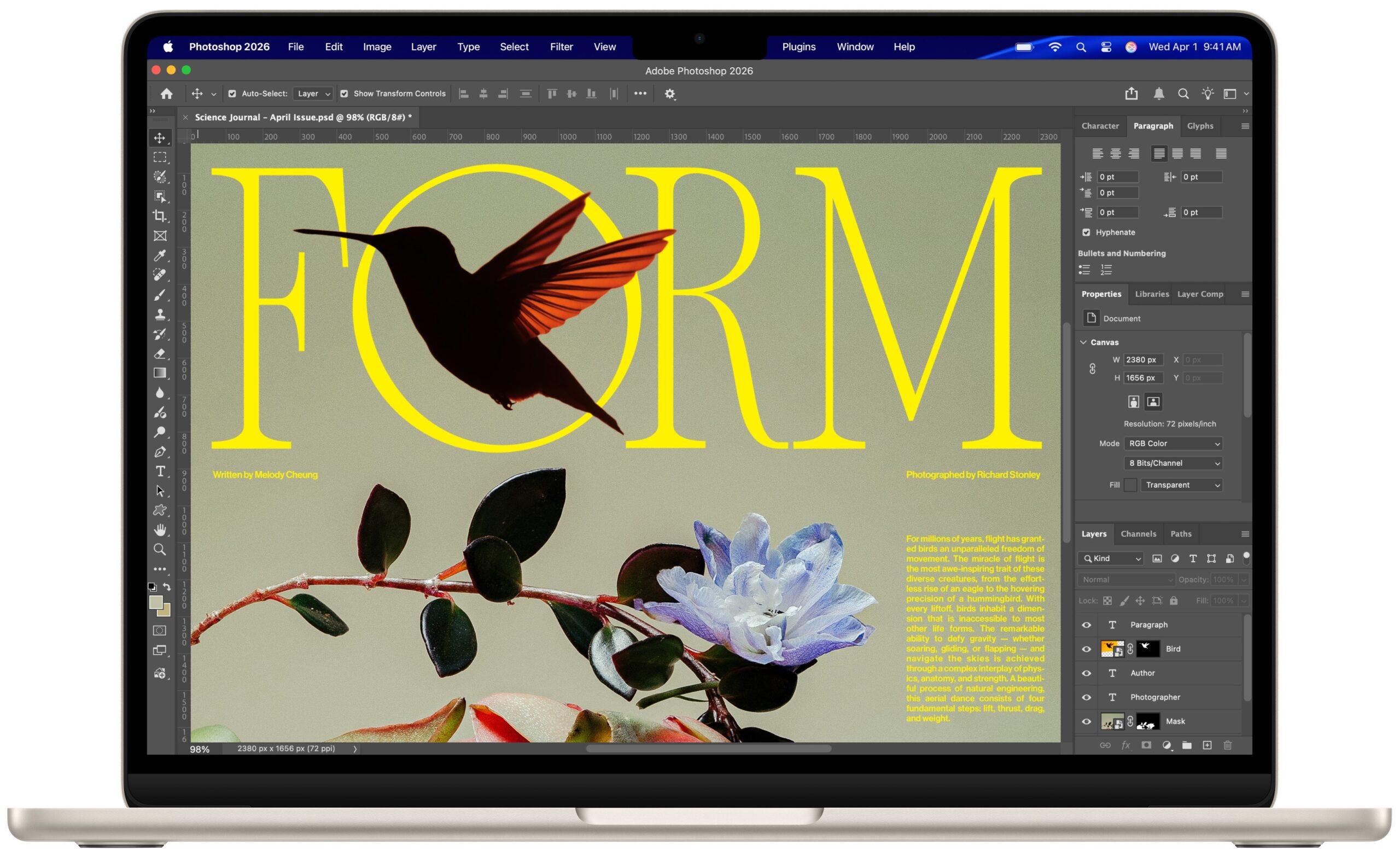
The M5 chip features a 10-core CPU and 8-core or 10-core GPU, delivering 1.5x to 4x improvements over the M4 depending on the task. Memory bandwidth increases to 153 GB/s, enabling smoother multitasking and faster app launches. Storage configurations now include a 4 TB option for the first time in a MacBook Air, and the new SSDs deliver up to 2x the read/write performance of the M4 generation.
Apple has integrated its N1 wireless chip for Wi-Fi 7 and Bluetooth 6. The MacBook Air continues to feature the 12-megapixel Center Stage camera, two Thunderbolt 4 ports, MagSafe 3 charging, and up to 18 hours of battery life. It’s available in sky blue, midnight, starlight, and silver.
The MacBook Air remains compelling for most laptop users. If you configure it comparably to the M5 14-inch MacBook Pro, it’s $400 cheaper, slightly smaller, and 26% lighter. Anyone limping along with an Intel-based Mac laptop will experience dramatic improvements if they upgrade to the M5 MacBook Air, and it’s also well worth considering an upgrade if an older M1 or M2 MacBook Air has started to feel slow.
MacBook Pro Introduces M5 Pro and M5 Max
The MacBook Pro gains significant performance upgrades with the new M5 Pro and M5 Max chips, along with doubled starting storage. For models with the M5 Pro chip, pricing starts at $2,199 for the 14-inch MacBook Pro and $2,699 for the 16-inch MacBook Pro. The M5 Max models start at $3,599 (14-inch) and $3,899 (16-inch).
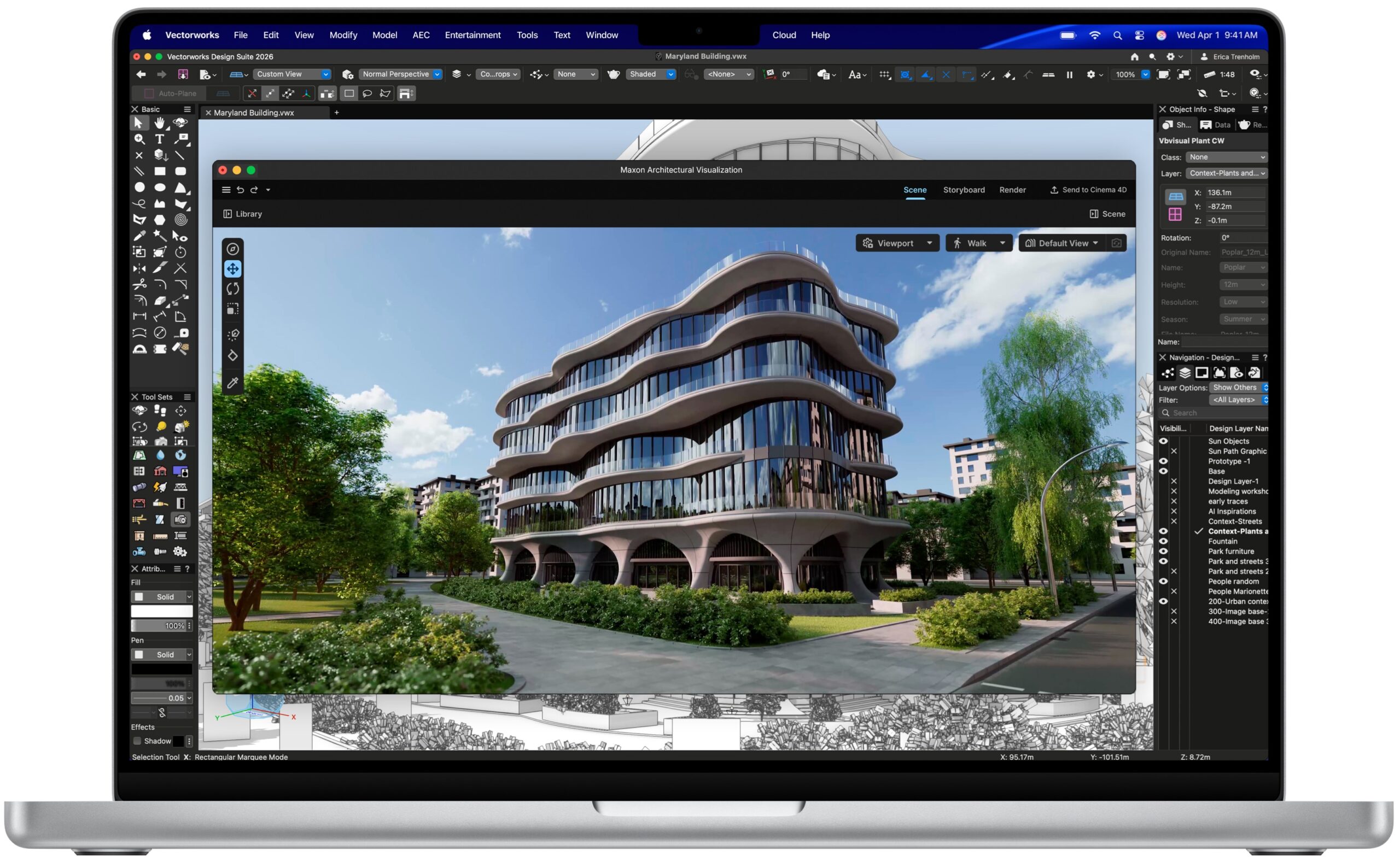
The M5 Pro offers either a 15-core or 18-core CPU and up to a 20-core GPU, now supporting up to 64 GB of unified memory with 307 GB/s bandwidth (up from the M4 Pro’s 48 GB ceiling). The M5 Max comes with an 18-core CPU, up to a 40-core GPU, and supports up to 128 GB of unified memory with 614 GB/s bandwidth. Compared with the previous M4 Pro and M4 Max, Apple claims up to 30% faster multithreaded CPU performance for the M5 Pro and 15% faster for the M5 Max. Both chips also deliver 4x faster peak GPU performance, in part thanks to new Neural Accelerators built into every GPU core. Ray tracing performance improves by up to 35% compared to the previous generation of chips.
As with the other product refreshes, Apple doubled starting storage: M5 Pro models now start at 1 TB, while M5 Max models start at 2 TB. The new SSDs also deliver up to 2x faster read/write performance. Like the MacBook Air, all models gain the N1 wireless chip for Wi-Fi 7 and Bluetooth 6.
Otherwise, the MacBook Pro retains its premium hardware from the previous generation, including the Liquid Retina XDR display, three Thunderbolt 5 ports, HDMI with 8K support, SDXC card slot, 12-megapixel Center Stage camera, and MagSafe 3 charging. Battery life remains up to 24 hours, and both sizes continue to be available in space black and silver.
For professionals pushing boundaries in motion design, visual effects, video editing, machine learning, and data-intensive workflows, these new MacBook Pro models offer real-world improvements that may justify an immediate upgrade from recent generations. Others with M3 or M4 Pro/Max machines may not see enough benefit to justify upgrading, but anyone on older hardware will appreciate the leap.
Talk with us to review your current hardware to see if you’d benefit from these upgrades.
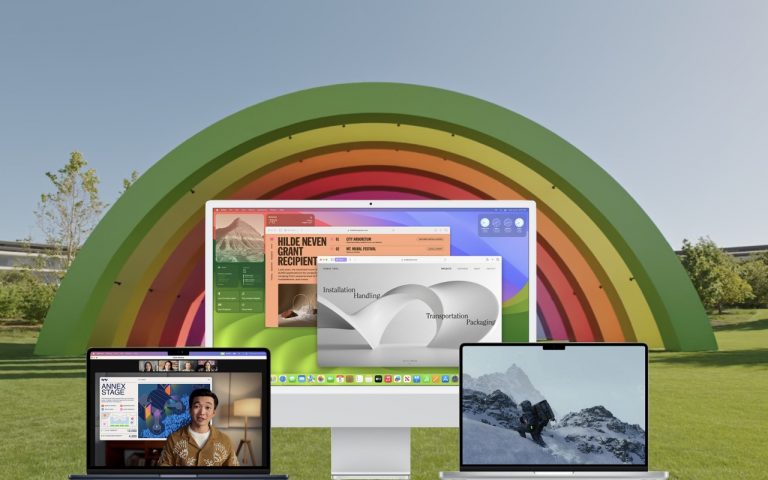
(Featured image by Apple)